Controller of Budget flags 16 counties for concealing true staff expenditures
news

Controller of Budget flags 16 counties for concealing true staff expenditures

At least 16 counties are under scrutiny for deliberately misstating their wage expenditures to give the impression that they are within the legal spending limits, Controller of Budget Margaret Nyakang’o has reported.

The counties are allegedly withholding salary payments for one or two months to make their annual employee compensation appear lower than it actually is.

Nyakang’o explained that this tactic allows counties to claim compliance with the Public Finance Management (PFM) Regulations, which restrict wage and benefits spending to 35 per cent of total revenue.

“Some counties are becoming clever by engaging in fraudulent budgeting. They are deliberately not requisitioning salaries for a month or two so that, by the end of the year, they report spending for fewer months,” she said.

The withheld payments are later reported in the next financial year, creating a misleading narrative of fiscal discipline. The practice reportedly started in the previous financial year as counties attempted to appear lawful despite escalating wage bills.

Despite these manipulations, many counties still surpassed the 35 per cent threshold. Nyakang’o warned that if full disclosures were made for the entire year, some counties could be spending as much as 70 per cent of revenue on salaries.

The 2023–2024 budget implementation review highlights Bungoma, Narok, Turkana, Bomet, Kilifi, Kisumu, Machakos, Makueni, Mandera, Marsabit, Meru, Murang’a, Nyandarua, Tharaka Nithi and Mombasa as the worst offenders.

Bungoma and Narok did not account for salary payments in May and June, while the others skipped June. This occurred despite all counties receiving full funding from the National Treasury for salary payments within the fiscal year.

“The Treasury and the Central Bank even left the system open for several days after the close of the financial year, but they still failed to report,” Nyakang’o said. “They are trying to manage the ratios. It is what we call fraudulent budgeting.”

Figures show Bungoma spent Sh6.31 billion over 10 months, equaling 45 per cent of its revenue, while Narok spent Sh5.5 billion without reporting the last two months, keeping its wage ratio at 35 per cent. Turkana exceeded the limit by two per cent even after excluding June, with Sh6 billion spent on salaries.

Bomet’s total wage bill stood at 48.6 per cent of revenue after including June, with Sh3.75 billion paid to staff. Other counties’ wage expenditures excluding June were Kilifi (28 per cent), Kisumu (48 per cent), Machakos (54.4 per cent), Makueni (44 per cent), and Mandera (38 per cent), spending billions collectively.

Marsabit reported 43 per cent of revenue on salaries, Meru 42.5 per cent, Murang’a 48 per cent, Nyandarua 30 per cent, Tharaka Nithi 53 per cent, and Mombasa 47 per cent.

Across all 47 counties, employee costs accounted for 47 per cent of total expenditure (Sh470.23 billion) and 41 per cent of revenue (Sh533.11 billion), far exceeding legal thresholds. Salaries and allowances alone consumed Sh220.64 billion, up Sh10.8 billion from the previous year.

Nyakang’o’s findings identify the wage bill as the greatest risk to county financial stability. Some counties spend more than half their revenues on salaries, leaving limited funds for development and operations.

Counties with the highest percentage of revenue spent on wages include Nyeri (55 per cent), Machakos (54.5 per cent), Baringo (53.4 per cent), Tharaka Nithi (53 per cent) and Taita Taveta (51 per cent). Others are Elgeyo Marakwet (51 per cent), Nairobi (50.8 per cent), Homa Bay and Lamu (50 per cent each), Murang’a (48 per cent), Kisumu (48 per cent), Bomet (48.6 per cent), Mombasa (47 per cent), Vihiga (47 per cent), Marsabit (43 per cent), Nyamira (44 per cent) and Busia (44 per cent).

Only eight counties complied with the legal limit: Kilifi (24 per cent), Siaya (26 per cent), Tana River (27 per cent), Nakuru (30 per cent), Kwale (31 per cent), Nandi (33 per cent) and Nyandarua (33 per cent).

Oct 14, 20254 mins read

Latest News

View more

Top Stories

View more
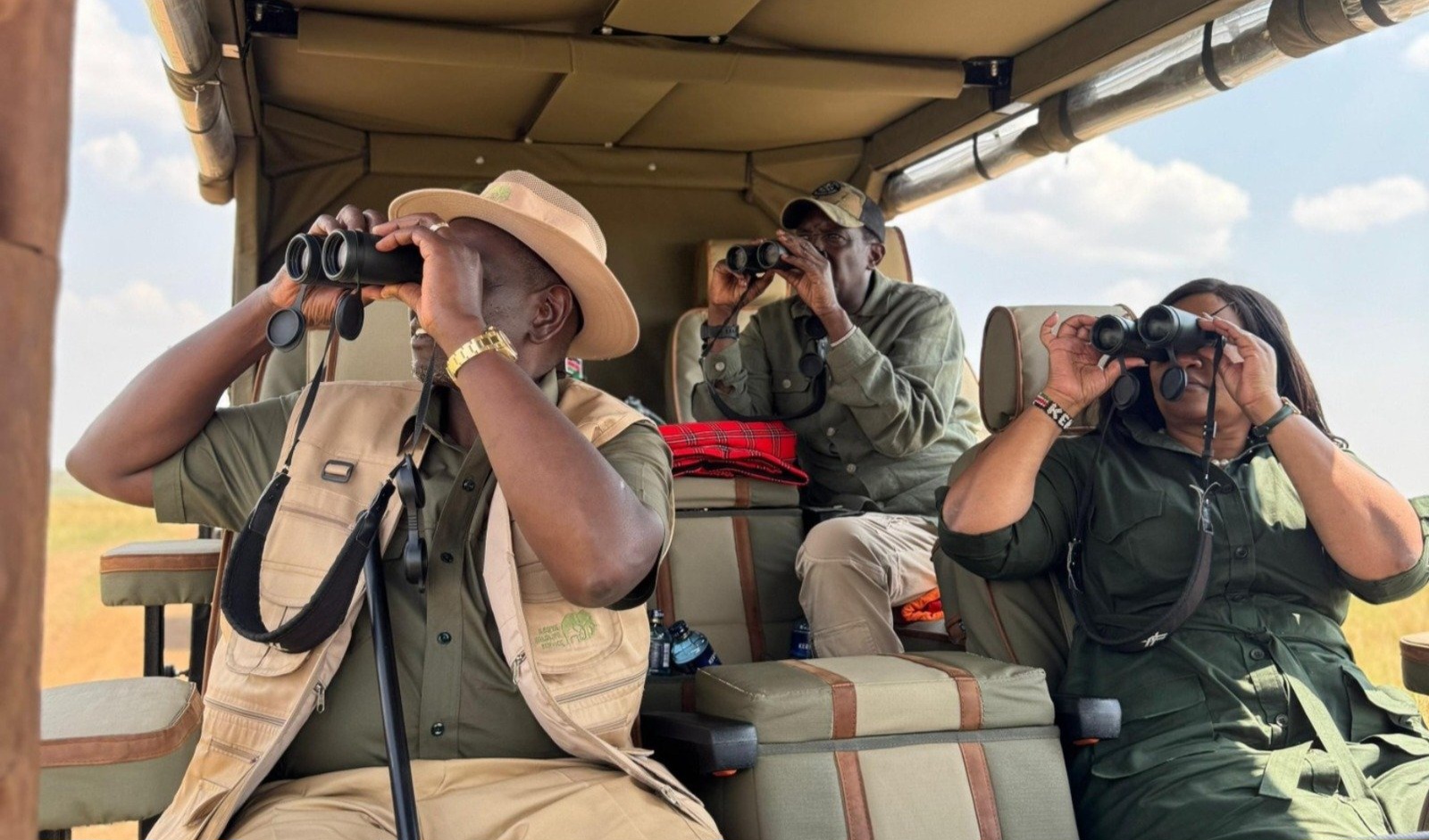
Kenyans to pay more than double, Tourists to pay upto Sh11,000 to enter national parks from October 1 as KWS revises entry fees
business

Kenyans to pay more than double, Tourists to pay upto Sh11,000 to enter national parks from October 1 as KWS revises entry fees

Kenyans and tourists will from October 1, 2025, start paying revised conservation fees to access the country’s national parks, reserves, and wildlife sanctuaries, following the approval of the Wildlife Conservation and Management (Access, Entry and Conservation) (Fees) Regulations 2025.

Parliament ratified the regulations on September 25, 2025, marking the first comprehensive revision of park entry fees in 18 years.

Under the new rates, entry fees for the country’s two premium parks, Amboseli National Park and Lake Nakuru National Park, will increase by 74.4 per cent, rising to Sh1,500 from Sh860 for adult locals and other East African Community (EAC) nationals. Foreign visitors will see charges rise by 50 per cent, from $60 (Sh7,770) to $90 (Sh11,660).

The fee changes also apply to minors. Kenyans and EAC students and children aged between five and 18 will pay Sh750 to enter Amboseli or Lake Nakuru, more than triple the previous rate of Sh215.

More than double

Nairobi National Park fees will more than double to Sh1,000 for locals and Sh10,360 for tourists. Fees for minors and access to other parks—including Tsavo, Meru, and scenic reserves—will also increase significantly.

The Kenya Wildlife Service (KWS) noted that over 90 per cent of its revenue comes from tourism, while 78 per cent of its budget is spent on security.

A pricing study showed that most visitors would accept higher fees if linked to improved services. Despite concerns about reduced visitation, KWS projects revenues to rise to Sh16.58 billion by 2028.

The revised regulations cover a wide range of charges, including daily park entry, special activities such as camping, water sports, guided tours, and other services.

Adults aged 18 and above will pay between Sh500 and Sh1,500, depending on the park, while students and children will pay half these amounts.

Vehicle parking

Fees also apply to vehicle parking, motorbikes, aircraft landings, boats, and organised group activities. Annual passes have been introduced, ranging from Sh10,400 for children to Sh130,000 for a family pass.

Tourism and Wildlife Cabinet Secretary Rebecca Miano said the Ministry is committed to a smooth rollout of the new fees.

“We are working closely with KWS to ensure that visitors experience a smooth transition under the new fee structure,” she said.

KWS Director-General Erustus Kanga confirmed that visitors who had already booked and paid for trips through eCitizen before the announcement would not be affected.

“KWS will honour all eCitizen payments made before this announcement, and the revised fees will therefore apply only to new bookings made from October 1 onwards,” Kanga said.

Annual funding deficit

The new fees aim to address a Sh12 billion annual funding deficit and strengthen the financial sustainability of wildlife conservation.

“This review is not just about revenue, it is about the survival of our wildlife and the resilience of our conservation systems,” Kanga said.

He emphasised that the fee review is part of a broader strategy to reduce reliance on government funding, improve institutional performance, and enhance the resilience of conservation systems.

“The new fee structure will support anti-poaching operations, habitat restoration, human-wildlife conflict mitigation, modernised infrastructure and conservation education,” he said.

The update followed a year-long consultative process with stakeholders across tourism, conservation, and the public.

The draft regulations were published in the Kenya Gazette on July 9, 2025, and were open for public comment before final approval.

KWS has assured visitors that Kenya remains a competitive and accessible destination for both local and international tourists, with additional revenue directly enhancing wildlife protection and visitor experiences.

Sep 29, 20253 mins read